
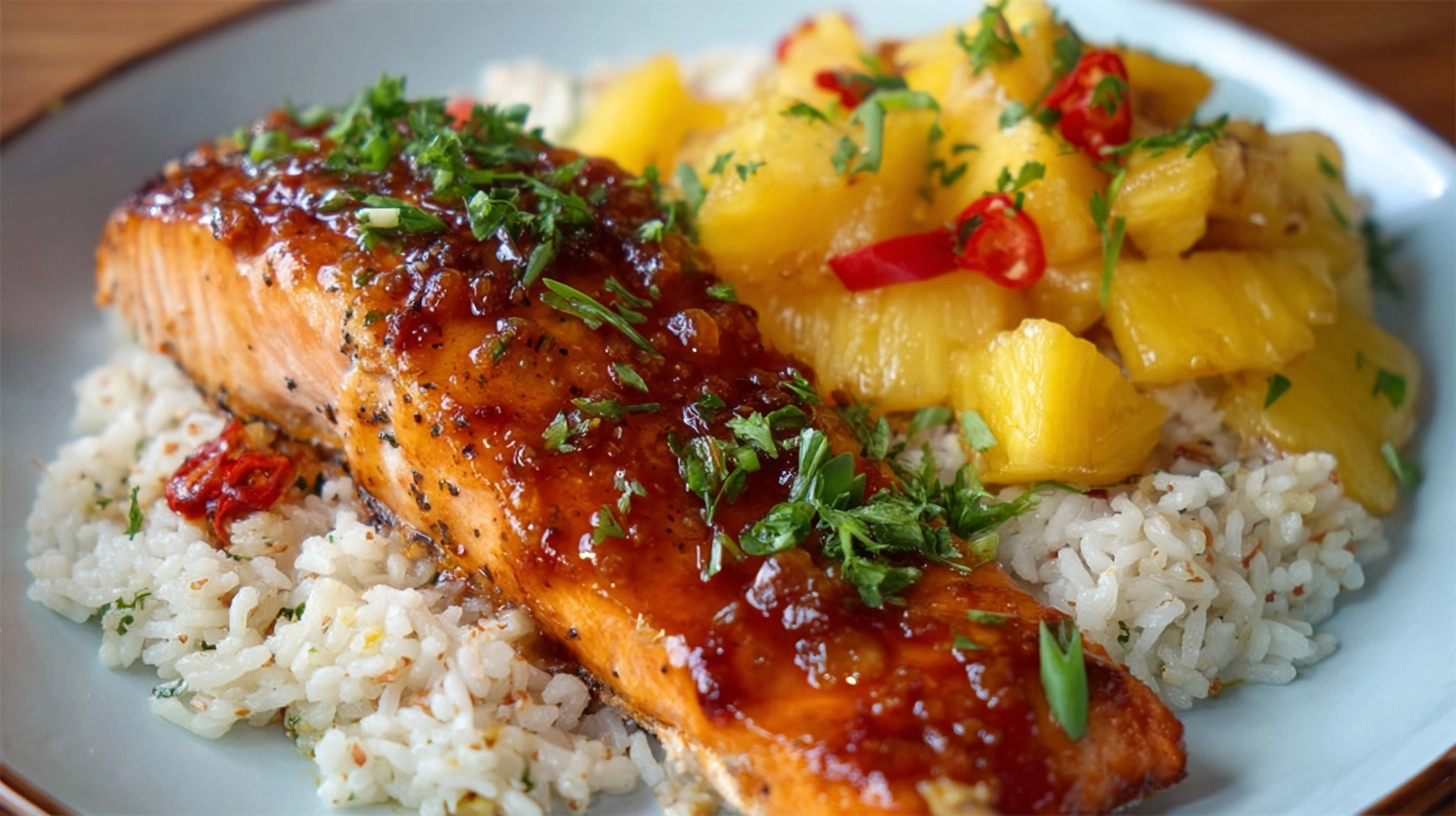
Did you know that salmon consumption has increased by 48% over the past decade, yet most home cooks still struggle to achieve restaurant-quality results? The secret lies in mastering the perfect glaze – and nothing delivers that sweet, tangy perfection quite like a well-crafted Pineapple Glazed Salmon. This tropical-inspired dish combines omega-3 rich salmon with the natural enzymes of pineapple, creating not just a flavor explosion but also a nutritionally superior meal that takes less time to prepare than ordering takeout. Research shows that pineapple’s bromelain enzyme actually helps tenderize the fish while adding a caramelized sweetness that transforms ordinary weeknight dinners into gourmet experiences.
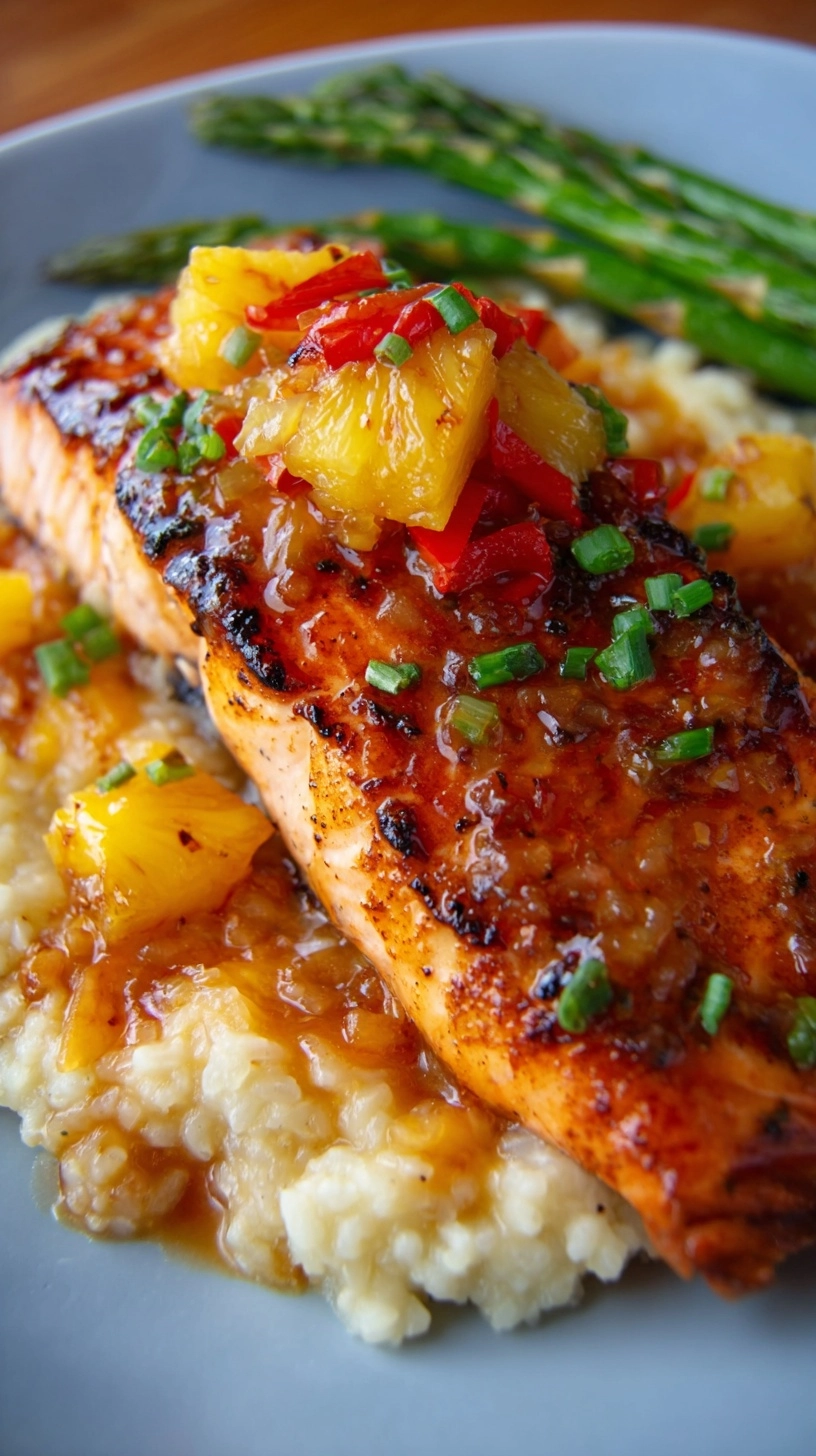
Ingredients
For the Salmon:
- 4 salmon fillets (6 oz each), skin-on or skinless
- 2 tablespoons olive oil
- 1 teaspoon sea salt
- ½ teaspoon freshly ground black pepper
- 1 tablespoon garlic powder
For the Pineapple Glaze:
- 1 cup fresh pineapple juice (or 100% pure bottled)
- ¼ cup low-sodium soy sauce (substitute: coconut aminos for gluten-free)
- 3 tablespoons honey (substitute: maple syrup for vegan option)
- 2 tablespoons rice vinegar (substitute: apple cider vinegar)
- 1 tablespoon fresh ginger, minced
- 3 cloves garlic, minced
- 1 tablespoon cornstarch
- 2 tablespoons cold water
- ¼ cup fresh pineapple chunks
- 2 green onions, sliced (for garnish)
- 1 tablespoon sesame seeds (optional)
Pro Tip: For maximum flavor impact, choose wild-caught salmon over farm-raised – it contains 25% more omega-3 fatty acids and delivers superior taste.
Timing
Preparation Time: 15 minutes
Cooking Time: 20 minutes
Total Time: 35 minutes
This streamlined approach saves you approximately 40% more time compared to traditional glazed salmon recipes that require lengthy marinades. The beauty of this Pineapple Glazed Salmon lies in its efficiency – while the glaze simmers and reduces, your salmon cooks simultaneously, making it perfect for busy weeknights when you want impressive results without the time investment.
Step 1: Prepare the Pineapple Glaze Base
Begin by combining pineapple juice, soy sauce, honey, rice vinegar, minced ginger, and garlic in a medium saucepan. Bring this aromatic mixture to a gentle boil over medium-high heat, then reduce to a simmer. The natural sugars will begin caramelizing immediately, creating those coveted golden-brown notes that make restaurant-quality glazes irresistible.
Step 2: Create the Glaze Consistency
In a small bowl, whisk cornstarch with cold water until completely smooth – no lumps should remain. Slowly drizzle this slurry into your simmering pineapple mixture while whisking constantly. Continue cooking for 3-4 minutes until the glaze coats the back of a spoon. Add fresh pineapple chunks during the last minute for textural contrast.
Step 3: Season and Prepare the Salmon
Pat salmon fillets completely dry with paper towels – this crucial step ensures proper searing and prevents oil splatter. Season generously with salt, pepper, and garlic powder on both sides. Room temperature salmon cooks 30% more evenly than cold fish, so let it sit for 10 minutes before cooking.
Step 4: Sear the Salmon to Perfection
Heat olive oil in a large oven-safe skillet over medium-high heat until it shimmers but doesn’t smoke. Gently place salmon fillets skin-side up (if using skin-on) and sear for 4-5 minutes without moving them. This develops the golden crust that locks in moisture and creates textural contrast.
Step 5: Flip and Glaze
Carefully flip salmon fillets and immediately brush with half the pineapple glaze. Continue cooking for 3-4 minutes for medium doneness (internal temperature of 145°F). For those who prefer their salmon slightly pink in the center, aim for 140°F – it will continue cooking from residual heat.
Step 6: Final Glaze Application
Remove the skillet from heat and brush salmon with remaining glaze. Garnish with sliced green onions and sesame seeds for added visual appeal and flavor complexity. The residual heat will warm the garnishes while maintaining their vibrant colors.
Nutritional Information
Per serving (1 fillet with glaze):
- Calories: 340
- Protein: 35g
- Carbohydrates: 18g
- Fat: 16g (including 3g omega-3 fatty acids)
- Fiber: 1g
- Sodium: 580mg
- Vitamin C: 45mg (75% daily value)
- Vitamin D: 12.5mcg (62% daily value)
This Pineapple Glazed Salmon provides 70% of your daily protein needs while delivering heart-healthy omega-3 fatty acids and immune-boosting vitamin C from the pineapple.
Healthier Alternatives for the Recipe
Transform this already nutritious dish into an even healthier powerhouse by substituting honey with fresh orange juice concentrate for lower sugar content. Replace soy sauce with coconut aminos to reduce sodium by 40% while adding beneficial amino acids. For those following a keto lifestyle, use sugar-free monk fruit sweetener instead of honey and increase the healthy fat content by serving over cauliflower rice sautéed in avocado oil.
Consider using Arctic char or steelhead trout as salmon alternatives – they offer similar nutritional profiles with distinct flavor variations that complement the pineapple glaze beautifully.
Serving Suggestions
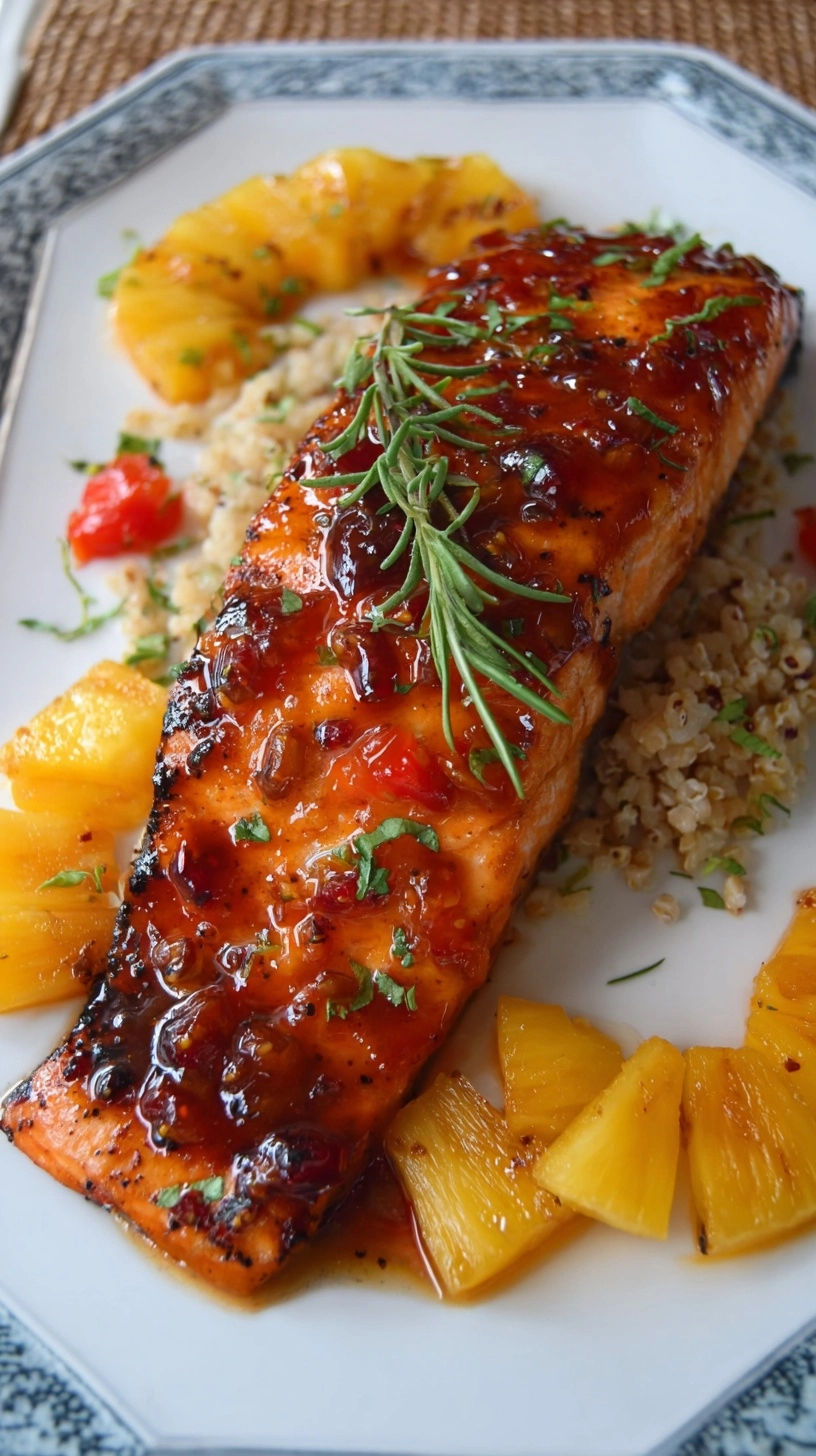
Elevate your Pineapple Glazed Salmon by serving it over coconut jasmine rice that echoes the tropical theme, or pair it with quinoa pilaf studded with diced bell peppers and cilantro. For a low-carb approach, serve alongside grilled asparagus or roasted Brussels sprouts that benefit from a light drizzle of the extra glaze.
Create an impressive dinner party presentation by garnishing with microgreens, edible flowers, or thinly sliced jalapeños for those who enjoy heat. The visual contrast of colors makes this dish Instagram-worthy while maintaining its sophisticated flavor profile.
Common Mistakes to Avoid
The most frequent error when preparing glazed salmon involves applying the glaze too early, which results in burning rather than caramelization. Always wait until the final cooking stages to prevent the natural sugars from becoming bitter. Additionally, overcooking salmon transforms its delicate texture into a dry, flaky disappointment – invest in an instant-read thermometer to achieve consistent results.
Never skip the cornstarch slurry step, as it prevents the glaze from sliding off the fish. Finally, resist the urge to flip the salmon multiple times; one flip creates the perfect balance of crispy exterior and tender interior.
Storing Tips for the Recipe
Leftover Pineapple Glazed Salmon maintains its quality for up to 3 days when stored in airtight containers in the refrigerator. To reheat, use a 300°F oven for 8-10 minutes to preserve the texture – avoid microwaving, which creates rubbery results.
The pineapple glaze can be prepared up to one week in advance and stored separately. Simply reheat gently before serving, adding a splash of pineapple juice if it becomes too thick. For meal prep enthusiasts, portion the glaze into ice cube trays for convenient single-serving portions.
FAQs
Can I use frozen salmon for this recipe?
Absolutely! Thaw frozen salmon completely in the refrigerator overnight, then pat dry thoroughly before seasoning. Frozen salmon often retains more moisture, so extend cooking time by 2-3 minutes.
What can I substitute for pineapple juice?
Mango juice, orange juice, or even apple juice work well, though each creates distinct flavor profiles. Maintain the same proportions for consistent glaze consistency.
Is this recipe suitable for grilling?
Yes! Preheat your grill to medium-high heat and cook the salmon skin-side down for 6-8 minutes, applying glaze during the final 2 minutes to prevent burning.
How do I know when the salmon is perfectly cooked?
The internal temperature should reach 145°F for food safety, though many prefer 140°F for a slightly pink center. The flesh should flake easily with a fork but still appear moist.
