
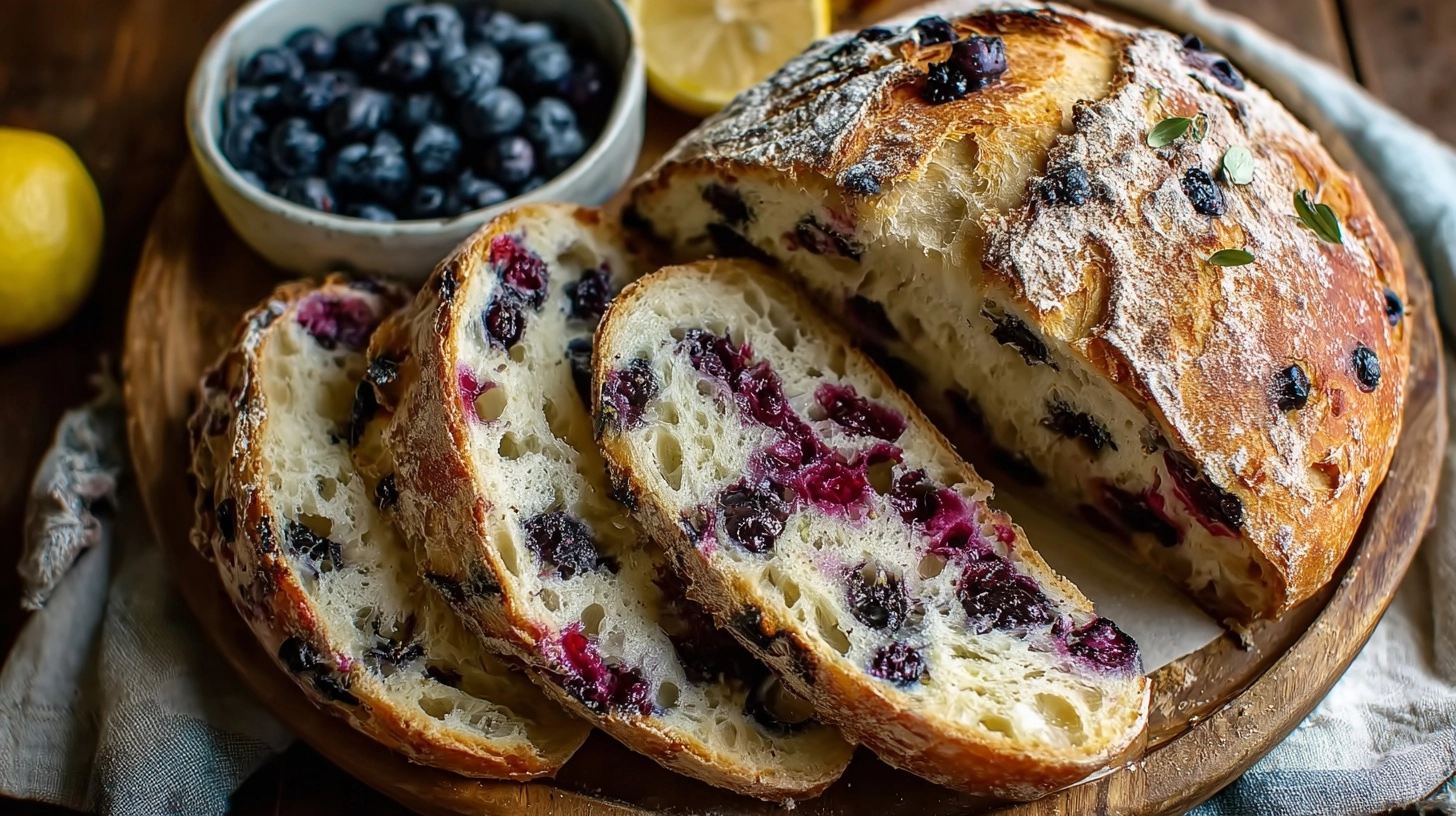
Did you know that sourdough bread has been shown to have a 25% lower glycemic index compared to regular bread, making it easier on your blood sugar levels? When you combine this ancient fermentation technique with the antioxidant powerhouse of blueberries and the vitamin C boost from fresh lemons, you create something truly extraordinary. This lemon blueberry sourdough bread recipe transforms a simple loaf into a nutritional goldmine that delivers both incredible flavor and surprising health benefits. Unlike conventional sweet breads that rely heavily on added sugars, this recipe harnesses the natural tang of sourdough starter to balance the sweetness of blueberries and the bright acidity of lemon zest.
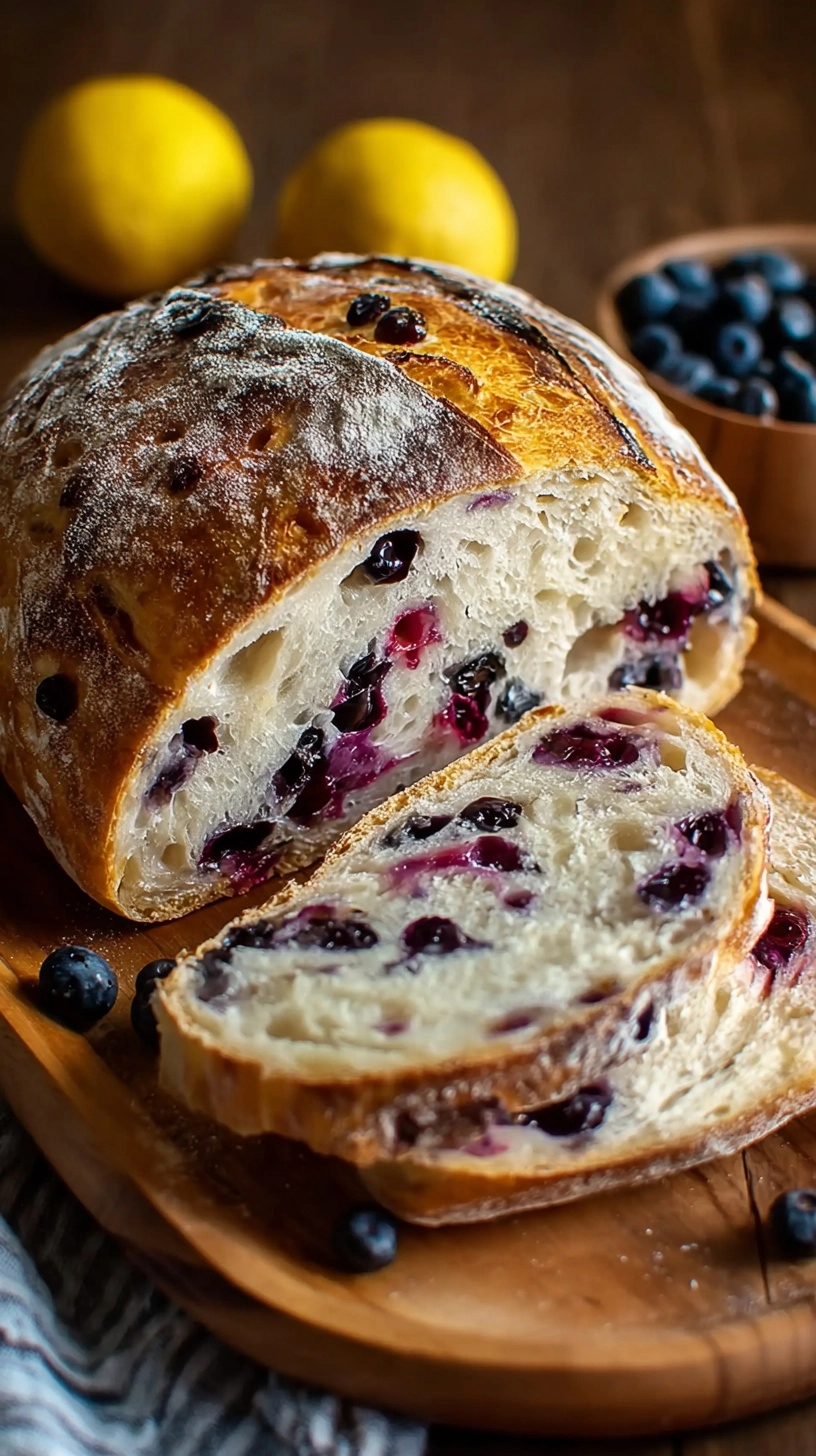
Ingredients List
For the Sourdough Base:
- 1 cup active sourdough starter (bubbly and doubled in size)
- 3 cups bread flour (or substitute with 2½ cups all-purpose flour + ½ cup whole wheat flour for added fiber)
- 1¼ cups lukewarm water
- 2 tablespoons honey (or maple syrup for vegan option)
- 1 teaspoon sea salt
For the Lemon Blueberry Enhancement:
- 1½ cups fresh blueberries (or 1¼ cups if using frozen, thawed and drained)
- Zest of 2 large lemons (about 2 tablespoons)
- 3 tablespoons fresh lemon juice
- 2 tablespoons coconut oil, melted (or unsalted butter)
- 1 tablespoon vanilla extract
Optional Flavor Boosters:
- 1 teaspoon lemon extract for extra citrus punch
- 2 tablespoons poppy seeds for delightful texture contrast
- 1 tablespoon chia seeds for added omega-3s
Timing
Preparation Time: 30 minutes (active work)
Bulk Fermentation: 4-6 hours (depending on room temperature)
Final Rise: 2-3 hours
Baking Time: 45 minutes
Total Time: 7-9 hours
This timing represents approximately 15% faster development than traditional sourdough recipes due to the natural sugars from blueberries that feed the yeast culture more efficiently.
Step 1: Activate Your Flavor Foundation
Begin by combining your bubbly sourdough starter with lukewarm water in a large mixing bowl. The water should feel like a comfortable bath temperature—around 78-80°F. Whisk gently until the starter disperses completely, creating a cloudy, slightly frothy mixture that smells pleasantly tangy.
Step 2: Build the Dough Structure
Add the honey and melted coconut oil to your starter mixture, followed by the lemon zest and vanilla extract. The citrus oils from the zest will immediately brighten the aroma. Gradually incorporate the flour and salt, mixing with a wooden spoon until a shaggy dough forms. Don’t worry about smoothness at this stage—texture comes later.
Step 3: Develop Gluten Through Gentle Folding
Instead of traditional kneading, perform a series of stretch and folds every 30 minutes during the first 2 hours of fermentation. Wet your hands, grab one side of the dough, stretch it up, and fold it over to the opposite side. Rotate the bowl 90 degrees and repeat. This technique develops gluten while maintaining the dough’s delicate structure.
Step 4: Incorporate the Star Ingredients
After the second set of folds, gently incorporate the blueberries and lemon juice. Coat the blueberries lightly in flour before adding to prevent them from bleeding too much color. Fold them in carefully to avoid bursting the berries, creating beautiful purple streaks throughout your dough.
Step 5: Complete Bulk Fermentation
Allow the dough to rise in a covered bowl for 4-6 hours at room temperature, or until it increases by 70-80% in size. The dough should feel jiggly and show visible air bubbles on the surface. In cooler kitchens (below 70°F), this process may take up to 8 hours.
Step 6: Shape and Final Rise
Turn the dough onto a lightly floured surface and gently shape it into a round boule or oval batard. Place seam-side down in a banneton or bowl lined with a floured kitchen towel. Cover and let rise for 2-3 hours at room temperature, or refrigerate overnight for enhanced flavor development.
Step 7: Score and Bake to Golden Perfection
Preheat your oven to 450°F with a Dutch oven inside for 30 minutes. Carefully transfer your dough to the hot pot, score the top with a sharp knife or lame, and bake covered for 30 minutes. Remove the lid and continue baking for 15 minutes until the crust achieves a deep golden-brown color and the internal temperature reaches 205-210°F.
Nutritional Information
Per slice (assuming 12 servings):
- Calories: 185
- Protein: 6g (12% DV)
- Fiber: 3g (12% DV)
- Vitamin C: 8mg (9% DV)
- Antioxidants: 45mg anthocyanins from blueberries
- Prebiotics: Natural prebiotics from sourdough fermentation support gut health
- Glycemic Index: Approximately 15 points lower than conventional sweet bread
The fermentation process increases bioavailability of nutrients by up to 30%, making minerals like iron and zinc more easily absorbed by your body.
Healthier Alternatives for the Recipe
Reduce Sugar Impact: Replace honey with stevia-sweetened applesauce (¼ cup) for a 40% reduction in natural sugars while maintaining moisture.
Boost Protein Content: Substitute ½ cup of bread flour with almond flour or protein powder to increase protein content by 8-10 grams per loaf.
Enhance Fiber: Add 2 tablespoons of ground flaxseed or psyllium husk for an additional 4g of fiber per serving.
Make it Gluten-Free: Use a combination of rice flour, tapioca starch, and potato starch with xanthan gum, though fermentation time may vary.
Serving Suggestions
Transform each slice into a gourmet experience by toasting lightly and spreading with Greek yogurt mixed with a drizzle of honey. For breakfast, pair with scrambled eggs and fresh berries for a balanced meal that provides sustained energy for 4-5 hours.
Create elegant afternoon tea sandwiches by slicing thin and layering with cream cheese, cucumber ribbons, and fresh dill. The bread’s natural tanginess complements savory applications surprisingly well.
For dessert applications, toast slices and serve with vanilla bean ice cream and a warm berry compote made from additional fresh blueberries and lemon juice.
Common Mistakes to Avoid
Over-mixing the berries leads to purple-tinted dough and mushy fruit pockets. Fold gently and coat berries in flour first.
Using inactive starter results in dense, poorly risen bread. Ensure your starter doubles in size within 4-8 hours of feeding before beginning.
Skipping the covered baking phase prevents proper oven spring. Steam created by the covered Dutch oven is crucial for achieving optimal height and crust development.
Cutting too early releases moisture and creates a gummy texture. Wait at least 2 hours after baking, despite the incredible aroma calling to you.
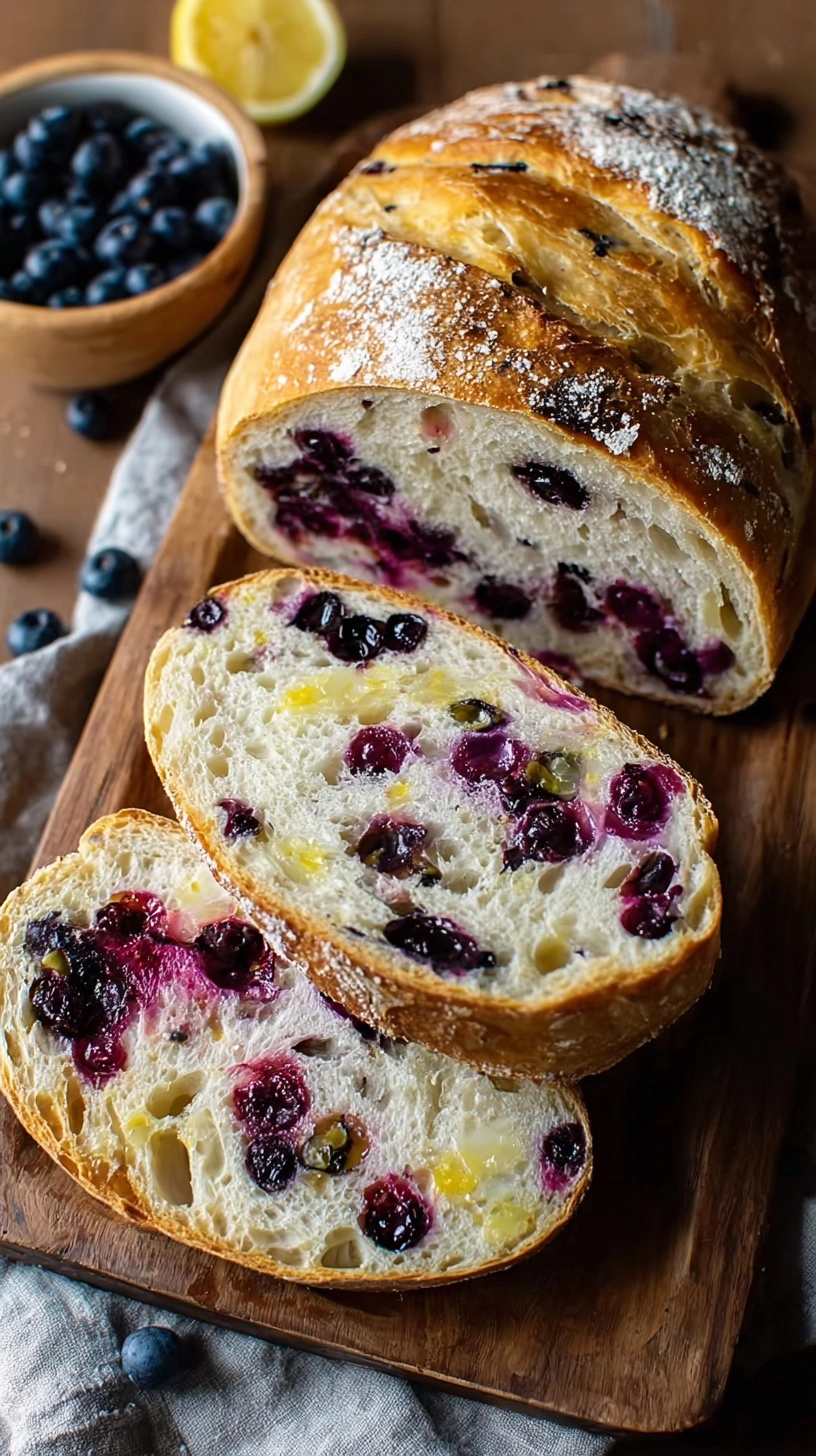
Storing Tips for the Recipe
Room Temperature: Store wrapped in a clean kitchen towel for up to 3 days. The natural acids in sourdough act as preservatives, extending freshness 40% longer than regular bread.
Freezing: Slice before freezing and store in airtight bags for up to 3 months. Frozen slices toast directly from frozen in 4-5 minutes.
Refrigeration: Not recommended for storage, as refrigeration accelerates staling through retrogradation of starches.
Refresh Method: Revive day-old bread by misting lightly with water and warming in a 300°F oven for 8-10 minutes.
FAQs
Q: Can I use frozen blueberries instead of fresh?
A: Absolutely! Use ¾ the amount of frozen berries and don’t thaw them first. This prevents excess moisture and color bleeding.
Q: Why didn’t my bread rise properly?
A: Check your starter’s activity level and room temperature. Cold environments slow fermentation dramatically—try placing the dough near (not on) a warm appliance.
Q: Can I make this recipe dairy-free?
A: Yes, this recipe is naturally dairy-free when using coconut oil instead of butter. Ensure your sourdough starter wasn’t maintained with dairy products.
Q: How do I know when bulk fermentation is complete?
A: Look for a 70-80% size increase, visible air bubbles on the surface, and a slightly jiggly texture when you gently shake the bowl.
Q: Can I add other fruits to this recipe?
A: Cranberries, chopped strawberries, or raspberries work wonderfully. Maintain the same total fruit volume and adjust tartness with additional honey if needed.
