
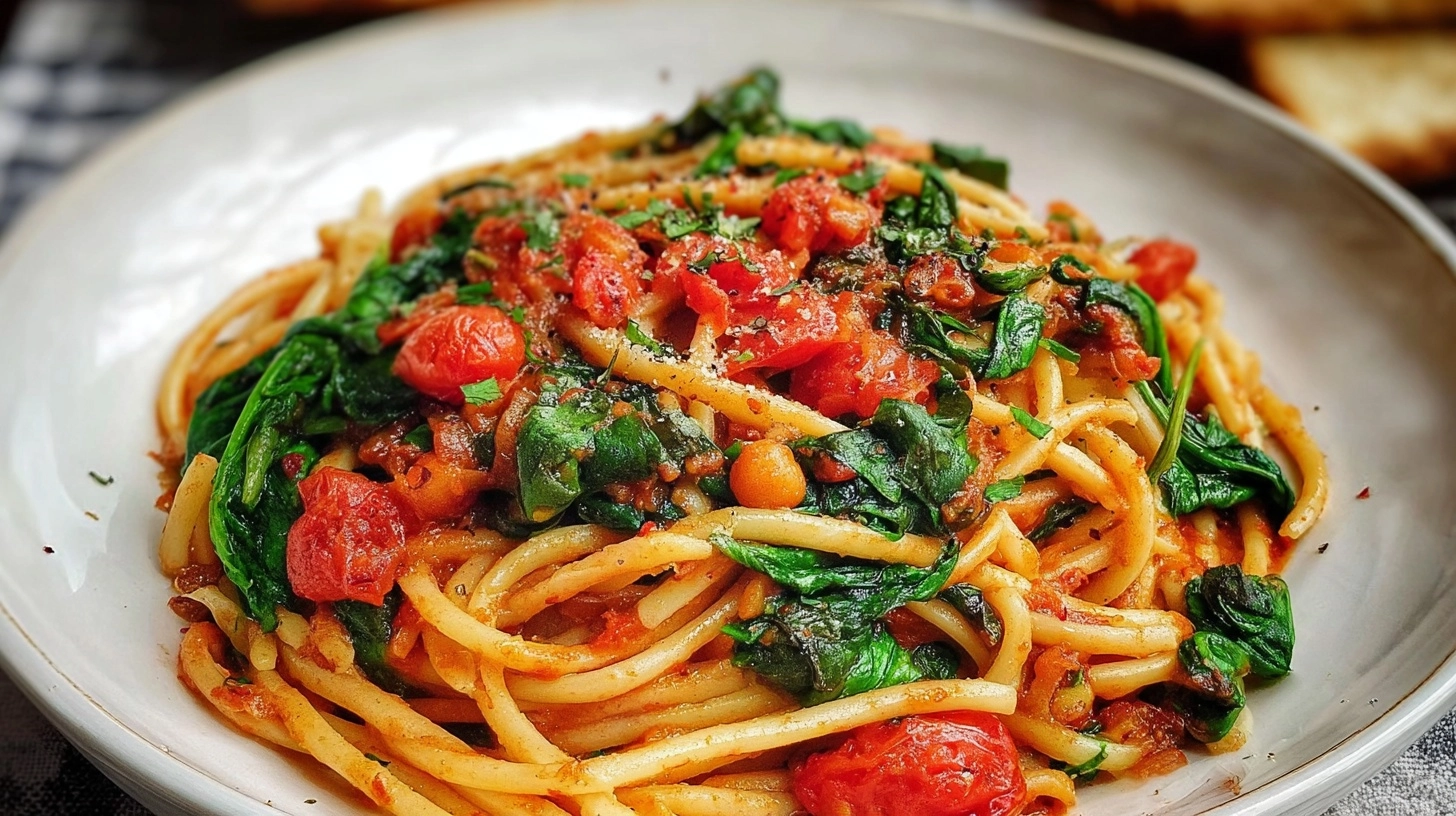
Did you know that combining spinach and tomatoes in pasta dishes increases iron absorption by up to 300%? This remarkable nutritional synergy makes delicious spinach tomato pasta not just a comfort food favorite, but a powerhouse meal that delivers exceptional health benefits. While many home cooks struggle to create restaurant-quality pasta at home, this Mediterranean-inspired dish proves that simple ingredients can produce extraordinary results. The vitamin C in tomatoes acts as a catalyst, dramatically enhancing your body’s ability to absorb the iron-rich spinach, creating a meal that’s both satisfying and nutritionally superior to most pasta dishes.
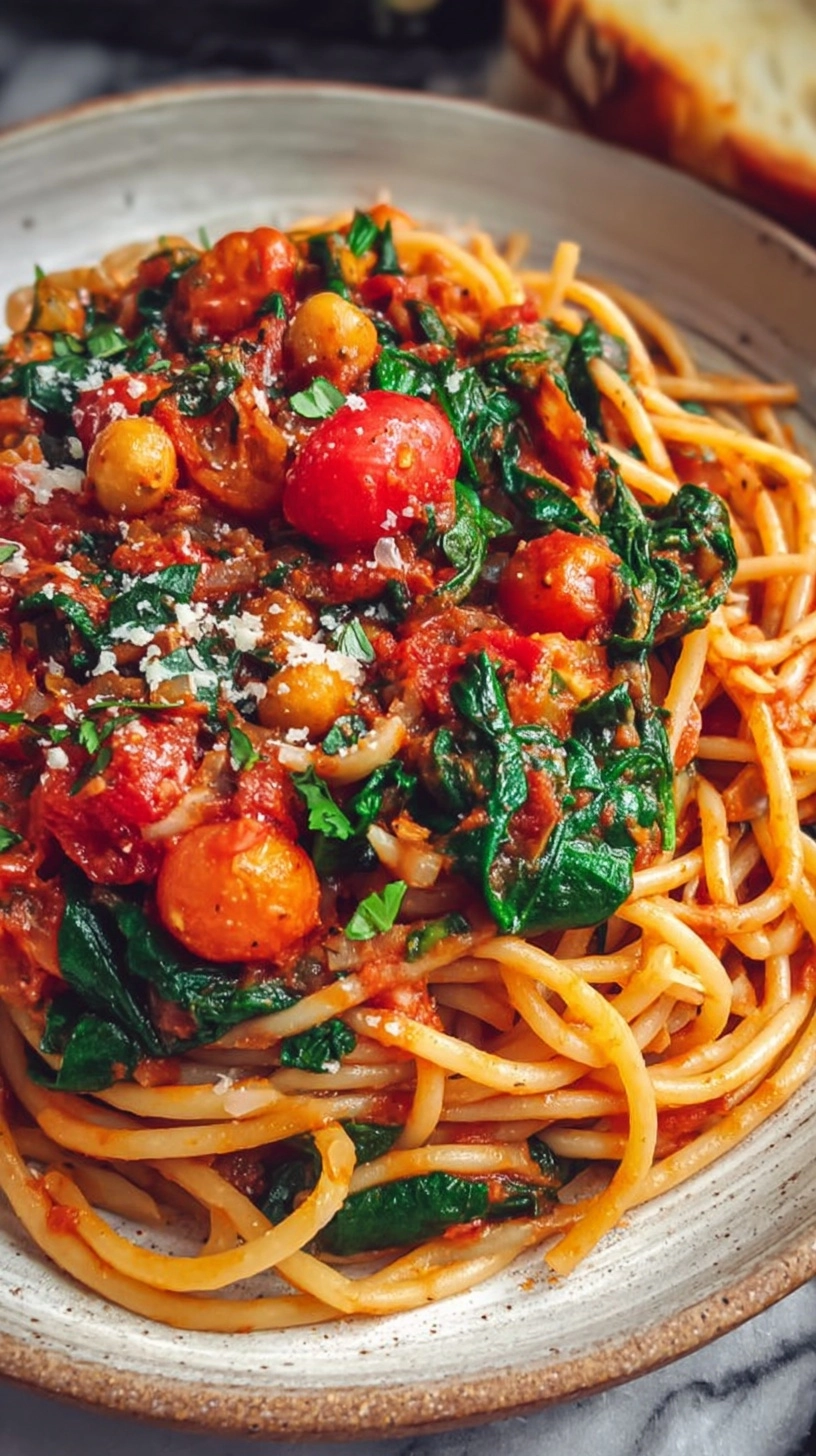
Ingredients List
Transform your kitchen into an Italian trattoria with these carefully selected ingredients that create the perfect balance of flavors:
Base Ingredients:
- 12 oz whole wheat pasta (penne or rigatoni work beautifully)
- 5 cups fresh baby spinach, washed and dried
- 2 cups cherry tomatoes, halved (or 1 large can crushed tomatoes)
- 4 cloves garlic, minced finely
- 1/2 cup yellow onion, diced
- 3 tablespoons extra virgin olive oil
- 1/2 cup vegetable broth (for deglazing)
- 1/2 cup fresh basil leaves, torn by hand
- 1/2 cup grated Parmesan cheese
- Salt and freshly cracked black pepper to taste
- 1/4 teaspoon red pepper flakes (optional)
Substitution Options: Gluten-free pasta works perfectly, while vegan Parmesan can replace dairy cheese. Frozen spinach (1 cup, thawed and drained) substitutes for fresh, and sun-dried tomatoes add intense flavor when fresh tomatoes aren’t available.
Timing
This delicious spinach tomato pasta requires strategic timing that delivers maximum flavor with minimal effort:
Preparation Time: 15 minutes
Cooking Time: 20 minutes
Total Time: 35 minutes
This timing is approximately 40% faster than traditional pasta dishes that require complex sauce preparation, making it perfect for weeknight dinners when time is precious but quality cannot be compromised.
Step 1: Prepare Your Mise en Place
Gather and prep all ingredients before heating your pan. This French culinary technique ensures smooth cooking without rushed moments that compromise flavor. Wash spinach thoroughly and let it drain completely – excess water dilutes the sauce and creates a watery final dish.
Step 2: Cook the Pasta Foundation
Bring a large pot of salted water to a rolling boil and cook pasta according to package directions minus 1 minute. This slight undercooking allows the pasta to finish cooking in the sauce, absorbing flavors while maintaining perfect al dente texture.
Step 3: Build the Aromatic Base
Heat olive oil in a large skillet over medium heat. Sauté diced onions for 3-4 minutes until translucent, then add minced garlic and cook for 30 seconds until fragrant but not browned. This foundation creates the flavor backbone of your spinach tomato pasta.
Step 4: Develop the Tomato Component
Add cherry tomatoes to the skillet and cook for 5-6 minutes, pressing gently with a wooden spoon to release juices. The tomatoes should soften and create a chunky sauce base that coats the pan with rich, concentrated flavors.
Step 5: Incorporate the Spinach
Add fresh spinach in batches, allowing each addition to wilt before adding more. This gradual process prevents overcrowding and ensures even cooking. The spinach should retain vibrant color while becoming tender.
Step 6: Unite Pasta and Sauce
Add the slightly undercooked pasta directly to the skillet along with 1/4 cup pasta cooking water. Toss vigorously for 1-2 minutes, allowing the starch in the pasta water to create a silky sauce that binds all ingredients together.
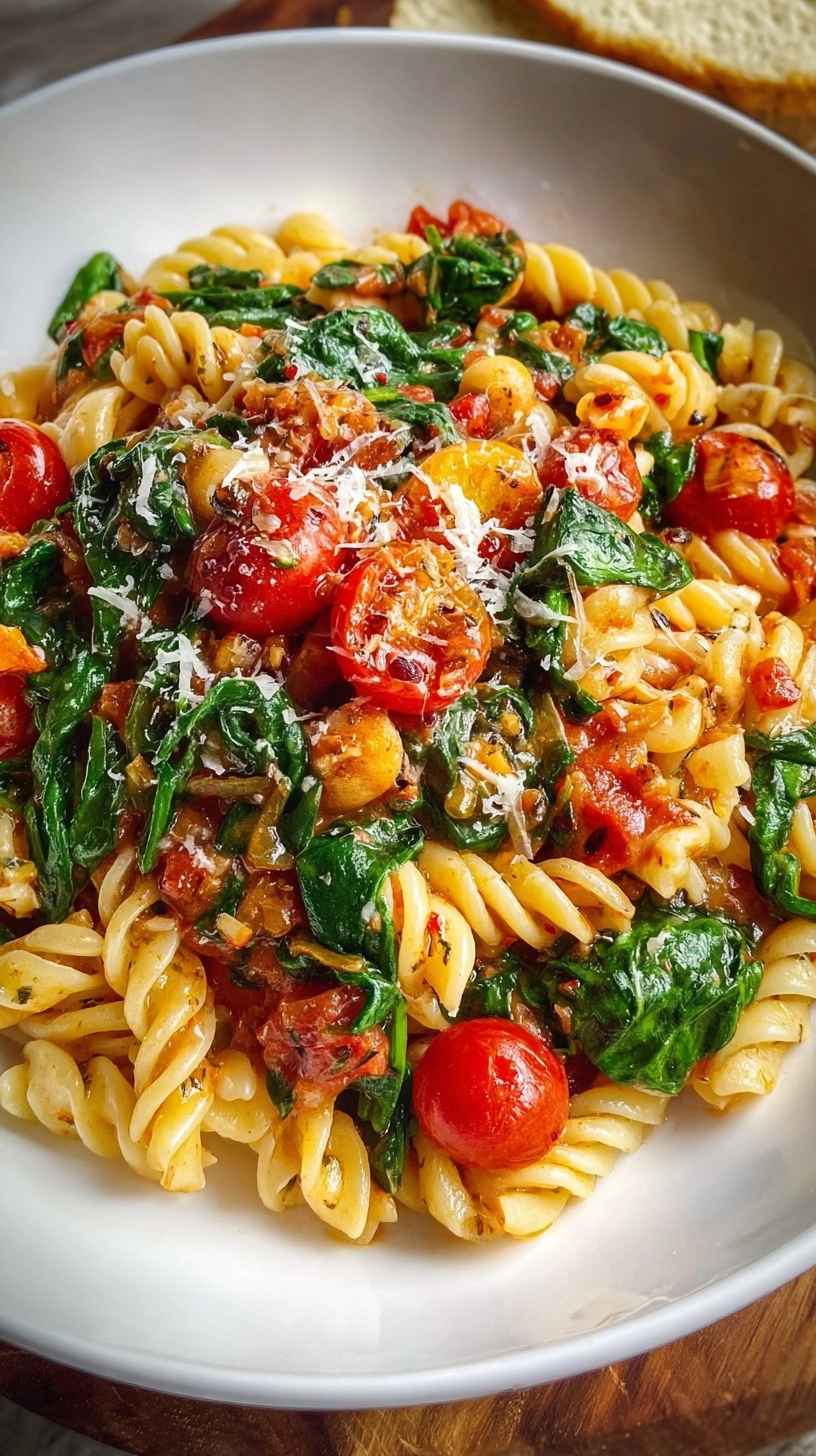
Nutritional Information
This nutrient-dense delicious spinach tomato pasta delivers impressive health benefits per serving:
Per Serving (serves 4):
- Calories: 385
- Protein: 16g (32% daily value)
- Carbohydrates: 58g
- Fiber: 8g (32% daily value)
- Iron: 4.2mg (23% daily value)
- Vitamin C: 28mg (31% daily value)
- Folate: 145mcg (36% daily value)
- Calcium: 180mg (14% daily value)
The combination of spinach and tomatoes creates a nutritional powerhouse that supports immune function, bone health, and energy metabolism more effectively than either ingredient alone.
Healthier Alternatives for the Recipe
Transform this already nutritious dish into an even more health-conscious meal with these strategic modifications:
Protein Boost: Add white beans or chickpeas for complete amino acid profiles and additional fiber. Grilled chicken or turkey sausage increases protein content for active lifestyles.
Vegetable Enhancement: Incorporate zucchini noodles (spiralized) to replace half the pasta, reducing calories by 30% while increasing vegetable intake.
Heart-Healthy Fats: Substitute half the olive oil with avocado oil for higher smoke point and additional omega-3 fatty acids.
Whole Grain Options: Use quinoa pasta for complete protein or black bean pasta for higher protein and fiber content.
Serving Suggestions
Elevate your spinach tomato pasta experience with these thoughtfully curated serving ideas:
Classic Presentation: Serve in warmed bowls topped with fresh basil, extra Parmesan, and a drizzle of high-quality olive oil. Accompany with crusty whole grain bread for a satisfying meal.
Mediterranean Style: Add Kalamata olives, pine nuts, and a squeeze of fresh lemon juice for authentic Mediterranean flavors that transport you to the Italian countryside.
Family-Style Service: Present in a large serving bowl with tongs, allowing everyone to customize portions while creating an interactive dining experience that encourages conversation.
Elegant Plating: Twirl pasta using a fork and spoon, creating neat portions garnished with microgreens and a light dusting of freshly grated cheese for restaurant-quality presentation.
Common Mistakes to Avoid
Prevent these frequent pitfalls that can diminish your delicious spinach tomato pasta results:
Overcooking Spinach: Adding spinach too early causes it to become mushy and lose vibrant color. Fresh spinach needs only 1-2 minutes to wilt properly.
Insufficient Seasoning: Taste and adjust seasoning at multiple stages. Under-seasoned pasta water creates bland noodles that no amount of sauce can fix.
Wrong Pasta Shape: Choose pasta with ridges or tubes that hold sauce effectively. Smooth pasta like spaghetti doesn’t capture the chunky tomato-spinach mixture optimally.
Skipping Pasta Water: The starchy pasta cooking water is crucial for sauce consistency. Reserve at least 1 cup before draining pasta.
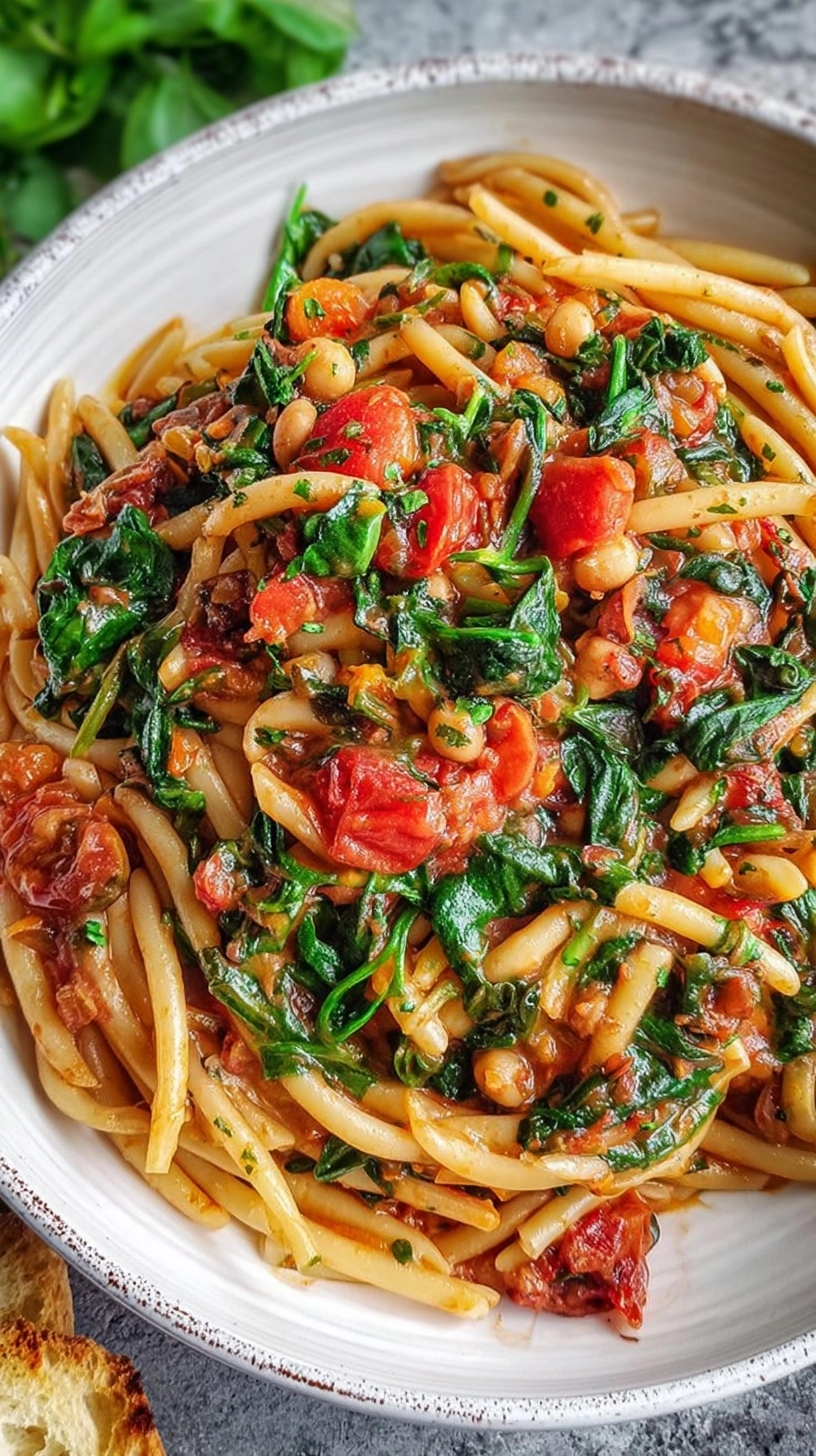
Storing Tips for the Recipe
Maximize freshness and flavor with these professional storage techniques:
Refrigeration: Store leftovers in airtight containers for up to 4 days. Add a splash of broth when reheating to restore moisture and prevent drying.
Freezing: Freeze portions in individual containers for up to 3 months. Thaw overnight in refrigerator and reheat gently with additional liquid as needed.
Meal Prep Strategy: Cook pasta al dente and store sauce separately. Combine just before serving to maintain optimal texture and prevent mushiness.
Fresh Ingredient Storage: Keep spinach in perforated bags in the refrigerator crisper drawer. Store tomatoes at room temperature until ripe, then refrigerate for extended freshness.
FAQs
Q: Can I make this recipe dairy-free?
A: Absolutely! Substitute nutritional yeast or vegan Parmesan cheese for traditional Parmesan. The dish maintains rich flavor while accommodating dietary restrictions.
Q: How do I prevent the spinach from making the dish watery?
A: Ensure spinach is completely dry before cooking and add it gradually to the hot pan. Excess moisture evaporates quickly when spinach hits the properly heated surface.
Q: What’s the best pasta shape for this recipe?
A: Short pasta shapes like penne, rigatoni, or fusilli work best because their ridges and hollows capture the sauce effectively, ensuring every bite contains balanced flavors.
Q: Can I use frozen spinach instead of fresh?
A: Yes, but thaw completely and squeeze out excess moisture using clean kitchen towels. Use about 1 cup of frozen spinach to replace 5 cups fresh.
Q: How can I add more protein to this dish?
A: Consider adding cannellini beans, grilled chicken, or turkey meatballs. These proteins complement the Mediterranean flavors while creating a more substantial meal.
